Hockey Skate Sharpening Service Explained
The difference between a good skate and a great skate often comes down to the edge. A quality hockey skate sharpening service does more than make blades feel sharper - it affects your grip in turns, your confidence in stops, and how efficiently you move every shift. For players, goalies, and parents trying to keep equipment dialed in through a long season, sharpening is one of the simplest services with the biggest impact.
A lot of skaters wait until something feels off. They notice slipping in crossovers, a weak push out of tight turns, or trouble holding an edge in a stop. By that point, the steel has usually been dull for a while. Regular sharpening helps prevent that drop-off and keeps performance more consistent from one skate to the next.
What a hockey skate sharpening service actually does
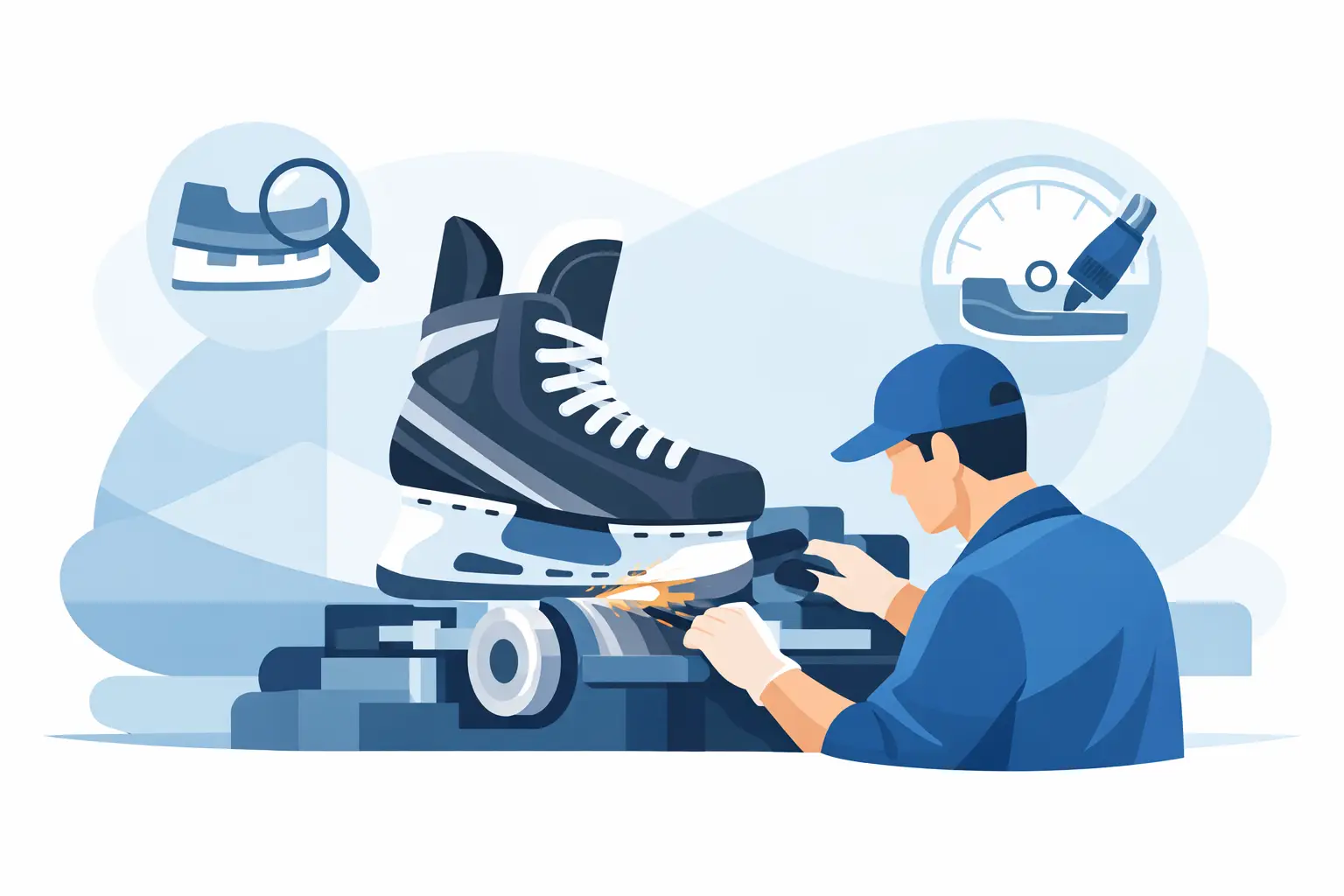
At its core, skate sharpening restores the edges on your runner by grinding a hollow into the bottom of the steel. That hollow creates two distinct edges, one on the inside and one on the outside. When those edges are even and clean, the skate bites properly into the ice.
That sounds straightforward, but there is real precision involved. The depth of the hollow changes how the skate feels under you. A deeper hollow generally gives more bite and can feel more aggressive, while a shallower hollow tends to provide more glide and a freer feel across the ice. There is no single setting that works for every player, every age group, or every skating style.
A dependable sharpening service also checks edge level. If one edge is higher than the other, the skate can feel unstable or force your stride to compensate. This is one reason consistent machine setup and experienced handling matter. The goal is not just sharp steel. The goal is steel that feels balanced, predictable, and matched to the skater.
Why the right hollow matters
When players say their skates feel too sharp or not sharp enough, they are often reacting to hollow as much as edge freshness. A deeper cut can help lighter players or skaters who want stronger bite in tight turns, but it can also create more drag. A shallower cut can help with glide and speed, but if it is too shallow for the skater, they may feel like they are washing out.
It depends on body weight, skating mechanics, ice conditions, and position. A youth player learning basic edge control may need something forgiving. A high-level player may want a very specific feel based on how they attack transitions and corners. Goalies are their own category entirely, since movement patterns and preferences differ from skaters.
This is where an experienced pro shop adds value. The best recommendation is not based on guesswork or habit. It is based on how you skate, what you are feeling on the ice, and whether you want more grip, more glide, or a different balance between the two.
Players and goalies do not always need the same setup
Forwards who rely on quick cuts may prefer a different hollow than defensemen who value stability and longer glide. Adult recreational players often want comfort and predictability more than an aggressive feel. Goalies may need sharpening that supports lateral movement and post work without over-gripping.
That is why a one-size-fits-all approach rarely holds up. If every pair of skates gets the same cut regardless of player type, size, and level, some skaters will adapt, but they may not be getting the best performance from their steel.
How often should you sharpen your skates?
There is no perfect schedule, but there are clear patterns. Players skating several times a week generally need sharpening more often than occasional recreational skaters. Youth players can sometimes go longer between sharpenings than heavier or more advanced skaters, but frequency still depends on ice time and preference.
As a practical baseline, many players sharpen every 10 to 20 hours of ice time. Some want fresh edges before every game weekend. Others are comfortable going longer if they like a slightly broken-in feel. Goalies also vary widely, since style and preference play a big role.
The better question is not just how long it has been. It is how the steel feels. If your edges are slipping, your turns feel less secure, or one skate feels different from the other, it is probably time. Visible nicks, blade contact with hard surfaces, or walking on concrete without proper guards can also move sharpening up the priority list.
Signs you should not wait any longer
If stopping feels chattery, if you are losing confidence on one side, or if your first few strides feel less connected to the ice, dull steel may be the issue. Parents often notice it in younger players when they start falling more on routine movements or seem hesitant in drills they normally handle well.
Skates do not always become unusable overnight. More often, they gradually lose precision. That slow change is exactly why many players benefit from a regular maintenance rhythm instead of waiting for a major problem.
What to expect from a professional hockey skate sharpening service
A strong service experience starts with questions. What hollow are you currently using? How often are you skating? Are you looking for more bite or more glide? Have you changed steel, skates, or skating level recently? Those details help avoid the common mistake of repeating the same sharpening without checking whether it still fits the skater.
Consistency is just as important as customization. If a skater likes a certain feel, the shop should be able to reproduce it reliably. That matters for serious players who notice small differences right away, but it also matters for younger players developing confidence. A predictable sharpening helps create a predictable skating experience.
Good service also means treating the skate as part of a larger fit and performance picture. Sharpening cannot fix a boot that is the wrong size or steel that is badly worn, but it can work together with proper fit, alignment, and runner condition to help the skate perform the way it should.
Sharpening is maintenance, not an afterthought
Players will spend time comparing sticks, helmets, and protective gear, yet skate maintenance sometimes gets pushed aside. That is a mistake. The skate is your connection to the ice, and edges influence nearly every movement you make. Even the best boot and steel package will underperform if the sharpening is inconsistent or wrong for the skater.
For families, regular service can also help protect the investment in skates. Keeping steel maintained, checking for damage early, and working with a shop that understands hockey-specific equipment can extend usable life and reduce frustration during the season.
At a specialty pro shop, sharpening is not treated as a quick add-on. It is part of helping players get the most from their equipment. That matters whether you are fitting first skates for a youth player, maintaining a competitive setup, or trying to make adult league skates feel right again. At Majer Hockey, that kind of practical, hockey-specific support has always been part of what makes expert service valuable.
Getting the best result from your next sharpening
The most helpful thing you can do is pay attention to how your skates feel and communicate that clearly. Saying your edges feel off is a start, but saying you are slipping in hard turns, catching too much in transitions, or wanting more glide gives the sharpener something useful to work with. Over time, that feedback helps dial in a setup that suits your game.
It also helps to stay consistent with who handles your skates when possible. A trusted shop that knows your history can make better recommendations than starting from scratch every time. If something has changed - new steel, a growth spurt, a position change, or different ice conditions - mention it.
The right sharpening should disappear beneath your stride. You should not be thinking about whether your skates will hold. You should be focused on the play, confident that your edges will respond the way you expect them to. That is what a good hockey service is supposed to do.


 -
-