How to Fit A Goalie Blocker Properly
A goalie usually notices a bad blocker fit before anything else. The stick feels loose, rebounds get messy, and the hand starts fighting the gear instead of working with it. If you are trying to figure out how to fit goalie blocker properly, the goal is simple: secure protection, clean stick control, and enough mobility to play naturally without forcing your hand into the wrong position.
A blocker should feel stable the moment your hand slides in. It should not swallow your hand, pinch across the knuckles, or make it hard to square the board to the puck. For younger goalies and parents shopping by age alone, this is where mistakes usually start. A blocker is not just about overall size. Palm depth, finger fit, sidewall shape, and cuff freedom all affect how it performs on the ice.
What proper blocker fit should feel like
The best fit is snug through the hand without feeling restrictive. Your fingers should sit naturally inside the finger stalls, and your index finger position should match the design of the blocker, whether it is a traditional full-finger fit or a model with a more open trigger-style feel. If your fingertips are jammed hard into the ends, the blocker is too small. If there is too much empty space and your hand slides around when you rotate the stick, it is too big.
The palm should feel connected to your hand, not separated from it. That connection matters because the blocker is doing two jobs at once. It is protecting the back of the hand and helping you control the stick. If the hand sits too deep or too loose inside the palm, the stick can feel delayed in your grip. That often shows up as weaker poke checks, unstable paddle control, and rebounds that come off the blocker face at odd angles.
A proper fit also means the cuff does not interfere with movement. When you flex your wrist forward, back, and side to side, you should feel resistance only from the natural structure of the blocker, not from a cuff that jams into your arm protector or catches on your chest and arm unit.
How to fit a goalie blocker properly in the store
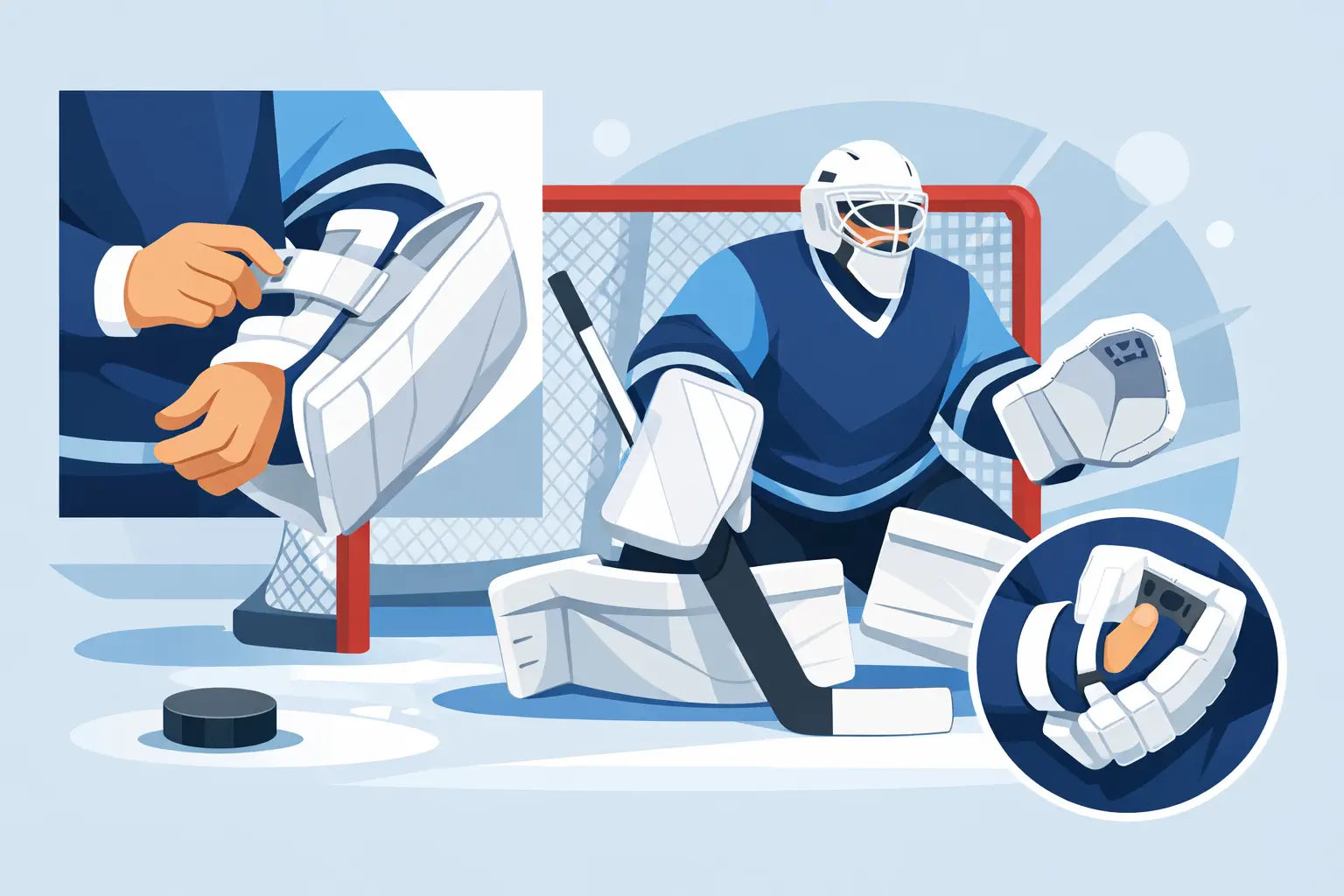
Start with the hand fully seated in the palm. Do not judge fit with your fingers halfway in. The hand needs to be pushed all the way into the blocker so you can tell where the fingers land and how the backhand protection sits over the knuckles.
Once your hand is in, close your grip around a goalie stick. This is the step many people skip, and it matters. A blocker can feel fine when your hand is open but completely different once you grip a shaft. The stick should feel secure without having to squeeze harder than normal. If you need to overgrip to keep the stick stable, the palm may be too loose or the blocker may simply not match your hand shape.
Next, rotate the wrist through game movements. Simulate stickhandling, paddle down position, and blocker saves to the side. Pay attention to whether the blocker board stays aligned with your hand or feels like it lags behind. A blocker that twists too easily can hurt both control and rebound consistency.
Then check the cuff area with your chest and arm gear on, if possible. Fit does not happen in isolation. A blocker that feels mobile on its own can become restrictive once it meets the arm floaters and sleeve shape of your upper-body protection. This is especially important for goalies who use bulkier chest protectors.
Sizing matters, but hand shape matters more than people think
Goalie blockers are commonly grouped by age category and general size range, but real fit is more specific than junior, intermediate, or senior. Two goalies with the same glove size can prefer different blockers because the palm volume, finger channel width, and cuff profile vary by brand and model line.
For youth goalies, parents often buy room to grow. That makes sense for some equipment, but it is risky with blockers. Oversizing can make stick control much harder and can teach poor habits early. A young goalie who cannot properly feel the stick through the palm may compensate by gripping too tightly or holding the blocker at awkward angles.
For older goalies, the issue is often the opposite. Some experienced players stay in a familiar size even when newer models have a tighter or more anatomical fit. A blocker should not feel cramped just because a previous generation fit differently. Trying on multiple models is often the fastest way to find the right match.
Signs your blocker is too small or too big
A blocker that is too small usually gives you immediate feedback. Your fingertips press into the ends of the finger stalls, the backhand padding may sit too high or too tight, and the wrist can feel locked up. Some goalies also notice hand fatigue because the fit forces the grip into a more tense position.
A blocker that is too big tends to feel less obvious at first, but the problems show up on the ice. The hand moves independently inside the palm, the board can feel disconnected during saves, and the stick may wobble when you transition from stance to paddle down. If the blocker shifts when you make quick wrist movements, it is not fitted closely enough.
One subtle warning sign is rebound inconsistency. If shots that should come off cleanly are dying in front of you or kicking out unpredictably, the issue is not always technique. Sometimes the blocker is not staying square because the hand is not anchored well inside the palm.
Palm fit, finger placement, and wrist mobility
The palm is the heart of blocker fit. Materials, grip texture, and internal shape all change how connected the stick feels. Some palms break in quickly and some need more time, so a new blocker may feel stiffer at first. That said, break-in should improve feel, not solve a major sizing problem. If the hand position is wrong from day one, it usually stays wrong.
Finger placement deserves extra attention. Your fingers should sit comfortably without curling awkwardly or stretching to reach a natural grip. If the index finger design feels unusual, give it a few minutes with a stick before ruling it out. Some blockers feel different in the store but excellent on the ice. Others feel comfortable right away but lose control under game movement. It depends on how the palm locks your hand in place.
Wrist mobility is where fit and style overlap. Some goalies want a freer cuff for aggressive stickhandling and active hands. Others prefer a more structured feel. Neither is automatically better, but the blocker should support your style instead of fighting it. If the cuff constantly catches or limits your range, that is a fit issue worth addressing.
How blocker fit affects performance
A properly fitted blocker helps with more than comfort. It supports cleaner stick positioning, stronger recovery movements, and better confidence handling pucks around the crease. Small fit problems often show up in important moments, especially when plays get scrambled and the hand has to react instantly.
Rebound control is a good example. The blocker board is designed to direct pucks away, but it can only do that consistently if the hand stays stable behind it. A loose fit changes the angle of the board at contact. A tight, restrictive fit can do the same by limiting natural hand movement.
Stick control is even more direct. If the blocker does not let you grip the stick naturally, every part of the game gets a little harder, from routine steering to passing the puck to a defenseman. Goalies spend so much time focusing on leg pads and catcher fit that the blocker sometimes gets treated like a standard item. It is not. It is one of the most interactive pieces of gear you wear.
Common fitting mistakes to avoid
The biggest mistake is buying by category only. Junior, intermediate, and senior labels are a starting point, not a final answer. The second mistake is trying on a blocker without a stick in hand. The third is ignoring how it works with chest and arm protection.
Another common issue is judging fit based only on comfort in the first minute. A blocker should feel secure and playable, but not every good fit feels soft right away. Protection and structure matter too. On the other hand, do not assume discomfort means it just needs break-in. If the hand position is clearly off, more ice time usually will not fix it.
For families shopping online, measurements and age recommendations help, but they are still only part of the picture. If a goalie is between sizes or changing brands, getting expert guidance can save time and prevent an expensive mismatch. That is one reason specialty hockey shops still matter. A place like Majer Hockey can help translate sizing charts into real fit, especially for growing goalies or players moving into a new level of equipment.
The right fit should disappear when you play
Once the blocker fits properly, you stop thinking about it. The stick feels like it belongs in your hand, the board stays square, and your wrist moves without hesitation. That is the standard worth aiming for, whether you are fitting a first-time youth goalie or replacing gear at a competitive level.
If a blocker makes you think about your hand every save, keep looking. The right one should let you focus on the puck, not the equipment.


 -
-