
Hockey Shoulder Pads Sizing Made Simple
A player can have the right skates, the right stick, and a good helmet, but if the shoulder pads shift every time they turn or leave gaps across the chest, the fit is off where it matters. Hockey shoulder pads sizing is not just about matching a chart. It is about coverage, mobility, and making sure the gear works with the rest of the equipment instead of against it.
For parents buying youth gear and for players replacing old equipment, shoulder pads can be one of the easier items to underestimate. The size on the tag only tells part of the story. Brand shape, player build, age level, and how much protection a player wants all affect the final fit.
How hockey shoulder pads sizing actually works
Most manufacturers size shoulder pads by chest measurement and general age range, then group them into youth, junior, and senior categories. That gives you a starting point, not a final answer. Two players with the same chest measurement may need different sizes if one has broader shoulders, a longer torso, or prefers a more mobile low-profile fit.
A proper fit starts with the shoulder caps sitting directly on the shoulders, not hanging off the sides and not riding inward toward the neck. The front panel should protect the sternum without floating away from the body. The back panel should cover the upper spine and shoulder blades. Around the ribs and underarms, the pad should offer coverage without pinching when the player reaches forward or lifts the stick.
That balance matters because shoulder pads that are too large tend to move around during contact, while shoulder pads that are too small can leave exposed areas where players take routine bumps, slashes, or awkward falls.
What to measure before you buy
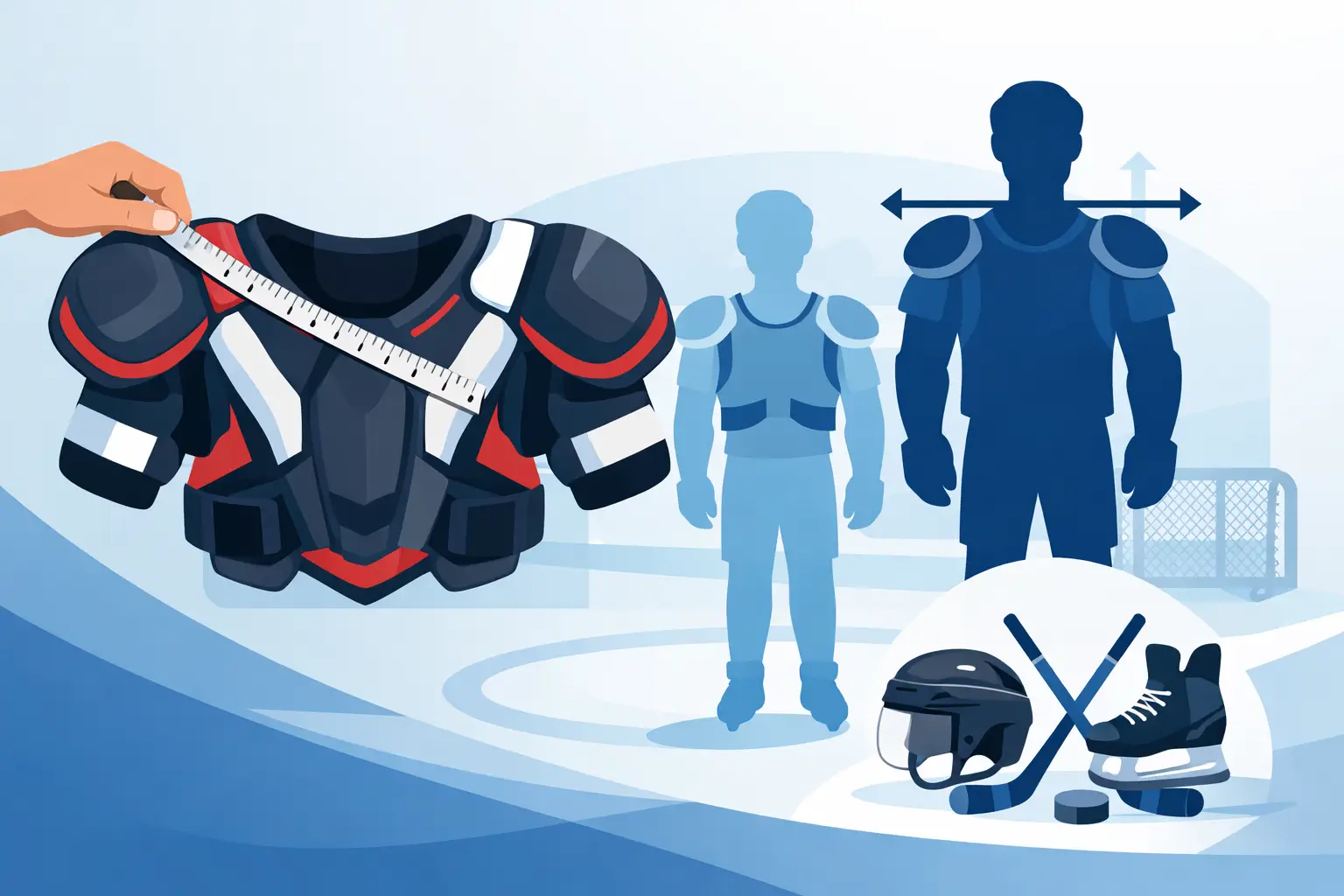
The most useful measurement is chest circumference. Use a soft tape measure around the fullest part of the chest, keeping it level and snug but not tight. For growing players, it also helps to note shoulder width and overall height, especially if they tend to be tall and lean or shorter and broader than average for their age group.
Manufacturer charts can vary, so the same player may land near the top of one brand's junior range and in the middle of another's. That is normal. If a player is between sizes, the decision usually comes down to fit preference and level of play. More physical players often lean toward fuller coverage if mobility still feels good. Recreational players may prefer a lighter, less bulky fit.
Height can be a useful secondary check. If the chest measurement suggests one size but the player is unusually tall for that size, the pad may come up short through the torso. If the chest is narrow but the shoulders are broad, the player may need to try the larger size to get the caps in the right position.
What a proper fit should look and feel like
Good hockey shoulder pads sizing should feel secure right away. The pads should sit close to the body without needing every strap cranked down to the maximum. When the player skates, reaches, rotates, and stickhandles, the gear should move with them rather than lag behind.
Start at the shoulders. The caps should center over the natural point of each shoulder. If they sit too far outside, the pad is likely too large or too wide in shape. If they sit inside the shoulder line, the pad may be too small.
Next, check the chest and abdomen. The front protection should cover the sternum and upper chest fully. Depending on the model, the lower front may stop higher for a more mobile fit or extend farther down for added protection. Neither is automatically better. It depends on the player's preference and the level of contact they expect.
At the back, the pad should protect the upper spine and shoulder blade area without pushing into the pants awkwardly. Some overlap with the hockey pants is good. Too much overlap can bunch up and restrict skating posture. Too little can create a gap when the player bends forward.
Under the arms, the bicep guards should line up with elbow pads so there is no major exposed space when the arms are relaxed or extended. This is one of the easiest areas to miss during a quick fitting.
Common sizing mistakes
The most common mistake is buying too large to get extra years out of youth gear. That can work for some less technical items, but shoulder pads are protective equipment. If they are oversized, they slide, rotate, and leave coverage where the player is no longer positioned. For younger players especially, loose pads can also feel awkward enough that they move differently on the ice.
Another mistake is focusing only on chest size and ignoring pad profile. Some shoulder pads are built bulkier through the chest and caps for players who want a traditional protective feel. Others are more tapered and low profile. A player switching brands may think the size is wrong when the real difference is the shape.
It is also common to forget how the shoulder pads interact with the rest of the gear. Elbow pads, pants, and even neck protection can change how a shoulder pad feels once everything is on. A pad that seems fine by itself may create gaps or pressure points in full equipment.
Youth, junior, and senior sizing differences
Youth shoulder pads are designed with smaller body proportions and lighter overall construction. The priority is basic protection, comfort, and ease of movement for newer players. The fit should still be secure, but the build is usually less segmented and less adjustable than higher-level models.
Junior shoulder pads cover a wide range because growth years are not consistent. This is where sizing gets trickier. A 10-year-old and a 13-year-old might both wear junior, but their builds can be completely different. In this category, trying on more than one model is often the best way to avoid buying a size that technically fits on paper but does not sit correctly on the body.
Senior shoulder pads generally offer more refined fit options, stronger materials, and better adjustment systems. Adult recreational players still need good coverage, but they may not want the most substantial model available. Competitive players often want a closer-fitting pad with enough protection for regular contact and higher-speed play.
When to size up and when not to
If a player is right at the top of a size range, sizing up can make sense, but only if the caps still align and the chest protection stays where it should. A little room for growth is reasonable in youth equipment. A loose protective fit is not.
If the player is between sizes and the larger option causes the shoulder caps to extend too far or the torso to hang low into the pants, stay with the smaller size. Most modern shoulder pads have enough adjustability to fine-tune a close fit. It is harder to control excess movement in a pad that is simply too big.
For adults, sizing up should usually be about body shape or desired coverage, not extra room. If you wear layers under your shoulder pads or prefer a roomier traditional fit, that may affect the choice. But the gear should still feel connected to your frame.
How to check fit at home or in store
Once the pads are on, fasten them the way the player would actually wear them. Then have the player mimic hockey movements. Reach the arms forward, raise the stick overhead, rotate the torso, crouch into skating posture, and simulate a few shooting motions. Watch for the chest panel lifting away, shoulder caps drifting off position, or the back panel jamming into the pants.
If possible, try the shoulder pads with elbow pads and pants. The goal is smooth overlap, not stacking so much gear that movement gets restricted. Parents often notice fit problems only after the first few skates, when the player complains that the pads feel bulky or keep shifting. That usually points to either oversizing or the wrong pad profile.
For online shoppers, start with accurate chest measurements and compare them carefully to the brand's chart. If the player falls between sizes, think honestly about build, level of play, and whether past gear felt too tight or too loose. A specialty hockey retailer can usually help interpret those details better than a generic chart alone.
The fit question that matters most
The best shoulder pad size is the one that gives full, stable coverage without making the player fight the gear. That answer is not always the biggest pad with the most protection or the smallest pad with the least bulk. It sits somewhere in the middle, where comfort, range of motion, and protection all line up.
That is why experienced fitting matters. At Majer Hockey, we see the same pattern every season - players and parents often come in with a number in mind, then end up in a different size or model once the pad is actually on the body. A good fit should feel natural enough that the player stops thinking about it. That is usually when you know you are close.
If you are replacing shoulder pads this season, take the extra few minutes to check the fit properly. Better coverage and better mobility tend to show up in the same place: gear that fits the way it should.


 -
-