Hockey Pants Size Chart and Fit Guide
A player can have the right helmet, the right skates, and a good stick, then still feel off the moment their pants are too loose or too short. That is why a hockey pants size chart matters. Pants that fit properly help protect the hips, kidneys, thighs, and lower spine without sliding around, catching on pads, or restricting stride.
For parents, sizing can be frustrating because one brand’s youth medium does not always feel like another brand’s youth medium. For adult players, the issue is often between sizes - one size feels tight through the waist, while the next feels bulky and rides too low. The chart is the starting point, but real fit comes from understanding how hockey pants should sit on the body and work with the rest of your gear.
How to use a hockey pants size chart
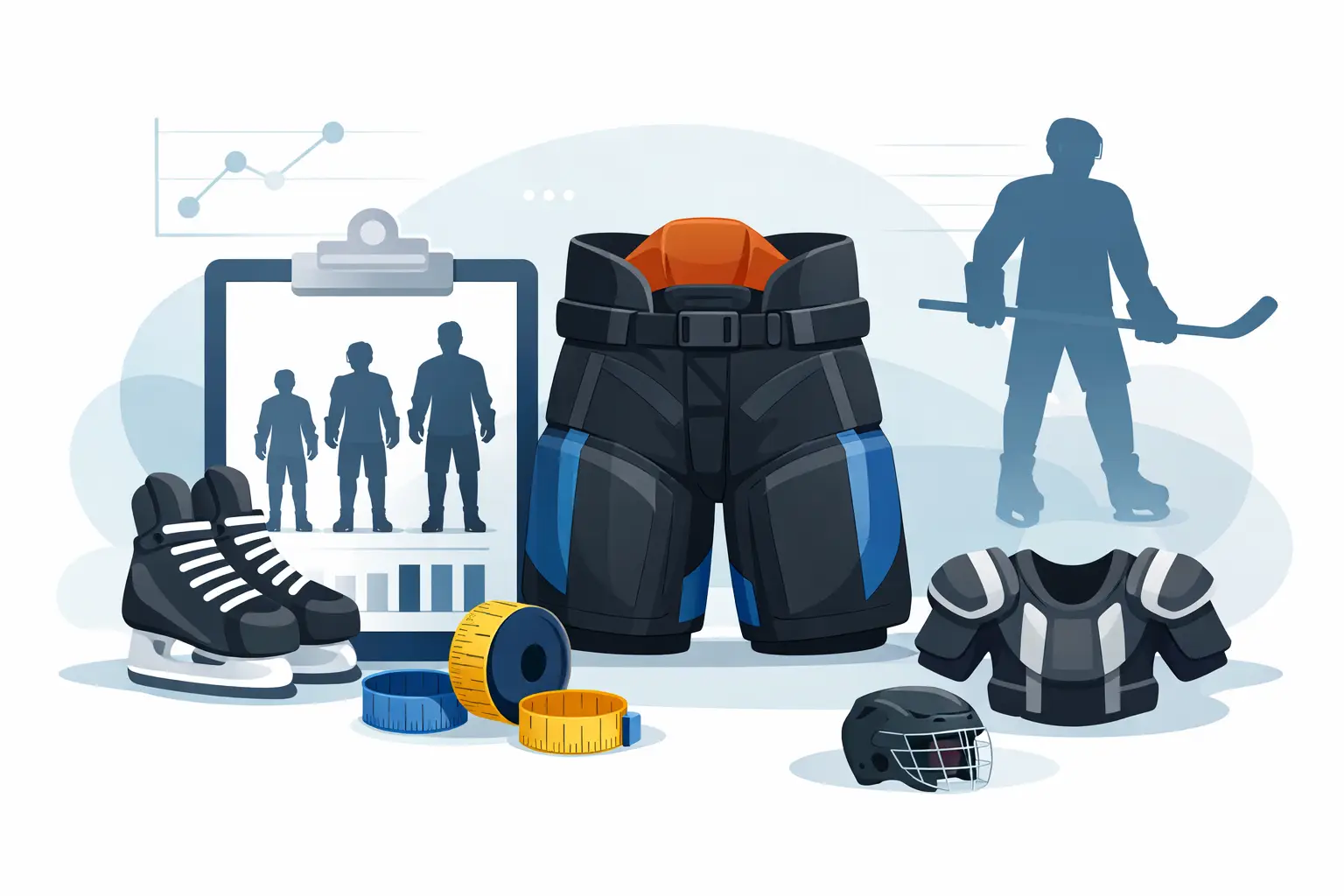
A hockey pants size chart usually starts with three measurements: waist, height, and age range. Age can help with youth sizing, but it should never be the deciding factor on its own. Kids grow at different rates, and adult recreational players come in every build imaginable. Waist and height are much more reliable.
In most cases, hockey pants are grouped into youth, junior, intermediate, and senior sizing. Youth generally fits younger children. Junior covers older kids and early teens. Intermediate is the bridge category that helps smaller teens and adults who do not fit comfortably into standard senior sizes. Senior is built for full-size teen and adult players.
Here is the practical way to read a chart. Start with the player’s actual waist measurement, not jeans size. Then compare height. If both measurements point to the same size, that is usually your best option. If they point to different sizes, fit preference and body type matter. A player with a slim waist but longer legs may need to size based on height. A stockier player may need to size from the waist first.
General hockey pants size chart ranges
Sizing varies by brand and model, but these ranges are a useful baseline.
Youth sizes
Youth small often fits waist measurements around 20 to 22 inches and heights roughly 3'3" to 4'1". Youth medium usually fits around 22 to 24 inches and about 3'7" to 4'4". Youth large often covers 24 to 26 inches and around 4'0" to 4'8".
Junior sizes
Junior small commonly fits a 24 to 26 inch waist and heights around 4'2" to 4'8". Junior medium often works for 26 to 28 inches and roughly 4'6" to 5'0". Junior large usually fits 28 to 30 inches and around 4'10" to 5'4".
Intermediate sizes
Intermediate small often starts around a 28 to 30 inch waist with heights from about 5'2" to 5'7". Intermediate medium may cover 30 to 32 inches and 5'5" to 5'9". Intermediate large often works for 32 to 34 inches and players in the 5'7" to 5'11" range.
Senior sizes
Senior small often fits a 30 to 34 inch waist and heights roughly 5'5" to 5'9". Senior medium usually covers 32 to 36 inches and around 5'7" to 5'11". Senior large often fits 34 to 38 inches and about 5'9" to 6'1". Senior extra large typically starts around 36 inches and up, depending on the brand.
These are not exact standards across the industry. Some tapered performance models fit closer through the hips and thighs, while traditional fits allow more volume and a roomier profile. That is why the chart gets you close, but not all the way there.
What proper hockey pants fit looks like
Hockey pants should sit around the natural waist, not sag like casual shorts. The kidney protection should cover the lower back properly, and the thigh guards should extend far enough down the leg to overlap with the top of the shin guards when the player is in a skating stance.
When standing upright, a small gap between the bottom of the pants and the top of the shin guards can be normal. Once the knees bend into a hockey position, that gap should close or nearly close. If there is still a large exposed area, the pants are probably too short.
The pants should feel secure without needing to be overtightened. Most players rely on the built-in belt, lace closure, or both to fine-tune the fit. If the player has to crank everything down just to keep the pants from falling, the size is likely too big. If the waistband digs in and the leg openings feel restrictive, the size may be too small or simply the wrong cut.
Common sizing mistakes
The most common mistake is buying too large for a child to grow into. Extra room sounds practical, but oversized hockey pants can shift during play and leave protective areas out of position. They can also interfere with skating mechanics. A little room for growth is fine. A full season or two of extra size usually is not.
Another common mistake is focusing only on waist size. Two players with the same waist can have very different leg length and torso proportions. Height still matters because it affects where the thigh and kidney pads land.
Adults also make the mistake of choosing by clothing size alone. A men’s medium in everyday shorts does not necessarily translate to senior medium hockey pants. Protective gear follows its own fit logic.
Youth, junior, and adult players need different fit priorities
For younger players, protection and stability come first. The pants should stay centered and not rotate easily. Since kids are still learning edge control and balance, bulky or slipping gear can become a distraction quickly.
For teen players, especially those in checking leagues, coverage becomes even more important. This is where parents often notice the difference between pants that simply fit and pants that actually protect properly during contact. If the player is near the top end of junior sizing, intermediate can be worth considering because it may offer a better balance of width and length.
For adult recreational players, comfort tends to drive the decision more than anything else. That is understandable, but mobility and coverage should still lead the way. Pants that feel light and flexible are great, as long as they still protect the hips and spine area effectively.
Fit differences between hockey pant styles
Not every model is cut the same way. Some pants have a classic volume fit with a wider shape through the hips and thighs. Others are more tapered and anatomically shaped for a closer feel. Neither is automatically better.
A roomier fit can feel more traditional and may work well for players who like extra mobility or wear a larger girdle-style base layer underneath. A tapered fit can reduce bulk and feel more connected to the body, which some players prefer for quick movement. The trade-off is that a close-fitting pant may feel restrictive if the player has a wider build or strong thighs.
Some models also include a one-inch extension zipper, which can help taller players who are between sizes. This feature can solve a length issue, but it does not fix a poor waist or hip fit. It helps in specific cases, not all of them.
How to measure before you buy
Use a soft measuring tape around the natural waist, usually just above the hips and near the belly button. Keep the tape snug but not tight. Then measure height in bare feet or regular socks, not skates.
If the player already has a pair that fits well, compare how that model sits with shin guards and shoulder pads on. Full gear matters because hockey pants do not exist in isolation. They need to connect cleanly with the shin guards below and the chest protection above.
If you are shopping online, compare your measurements against the specific brand chart for the exact model whenever possible. A general hockey pants size chart is useful, but model-level sizing is always better when available.
When to size up or down
Size up if the player is clearly at the top end of the height range and the current fit leaves too much thigh exposed. Size down if the pants slide easily even after adjustment or if the protection sits too low on the body.
If measurements place the player between two sizes, the better choice depends on build and preference. Lean players often do better staying smaller if coverage is still adequate. Broader players may need the larger size for comfort through the hips. This is one of those areas where trying the gear on, or getting help from a hockey-focused fitter, makes a real difference.
A good fit should feel secure, balanced, and easy to skate in. If the player stops noticing the pants after a few minutes on the ice, that is usually a sign you got it right. When questions come up, experienced guidance is still the fastest way to avoid guesswork and get equipment that performs the way it should.


 -
-