Hockey Helmet Size Guide for a Better Fit
A helmet that is too loose can shift on contact. One that is too tight can create pressure points that turn every skate into a distraction. A good hockey helmet size guide helps you avoid both problems and gives you a better starting point before you compare brands, adjustments, and cage options.
Helmet sizing sounds simple until you are fitting a growing player, shopping online, or comparing models that all feel slightly different. The right size is not just about head circumference. Shape matters, adjustment range matters, and so does the way the helmet sits once the chin strap and face protection are installed. That is why the best approach is to start with measurement, then confirm the fit on the head.
How to use a hockey helmet size guide
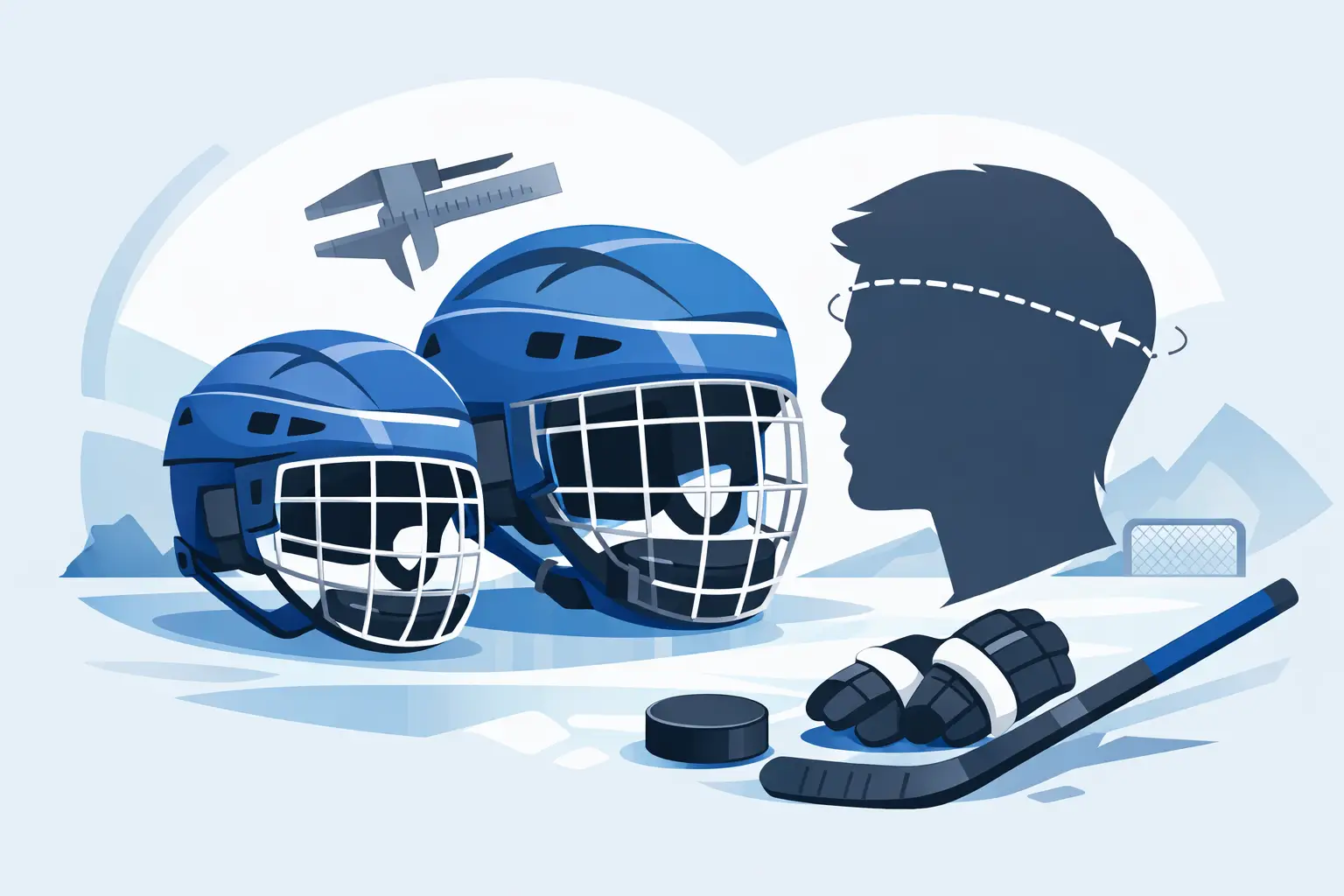
Start by measuring the player’s head with a soft tape measure. Wrap it about one inch above the eyebrows and around the widest part of the back of the head. Keep the tape level and snug, but not tight. That number, usually in inches or centimeters, is your baseline.
Most helmet manufacturers publish a size chart that matches head circumference to sizes such as small, medium, and large. That chart is useful, but it is still only the first filter. A player who measures at the high end of a medium in one brand may fit better in a large in another, especially if the shell shape runs narrow or round.
If you are between sizes, do not assume the larger option is automatically better. A helmet should sit securely without relying on the chin strap to hold it in place. If the shell is too large, it may look acceptable in the store but move too much during play. On the other hand, if the smaller size creates immediate pressure on the temples or forehead, it is not the right answer either.
What a properly fitted hockey helmet should feel like
A properly fitted helmet should sit level on the head, covering the forehead without tipping too far back. There should not be a large gap between the eyebrows and the front edge of the helmet. If it rides too high, protection is reduced where you need it most.
The fit should feel snug all the way around, not tight in only one spot. Even pressure is a good sign. Sharp pressure at the temples, forehead, or back of the head usually means the shape is wrong or the size is too small. A secure fit should feel stable, not painful.
Once the helmet is on, try a few basic checks. Shake the head side to side and up and down. The helmet should move with the head, not lag behind it. Press gently on the front, sides, and back. It should stay in position without obvious shifting. Open and close the adjustment system if the model has one, then repeat the test.
The chin strap matters, but it should not do all the work. Its job is to keep the helmet in place, not compensate for a shell that is too big. The strap should be snug under the chin, with enough room for comfort but not enough for the helmet to lift excessively.
Fit changes when a cage or visor is attached
Many players focus on the shell and forget that the final fit includes the face protection. Once a cage or visor is mounted, the helmet can feel slightly different. A combo that seemed fine on the shelf may sit differently once fully assembled.
With a cage, check that the chin cup sits centered and comfortably against the chin. If the cage is too short or too long for the helmet and face, the setup may pull awkwardly or leave the player constantly adjusting it. A good helmet fit should still feel balanced after the full setup is installed.
Why brand and model differences matter
Not all helmets fit the same, even in the same listed size. Some models have a more oval interior shape, while others feel wider through the sides. Some have simple tool-free adjustment that gives a broader fit range. Others are more fixed in shape and depend on choosing the correct size from the start.
This is where players and parents can get frustrated. A child may wear a medium in one line and not even come close in another. An adult player who has worn the same size for years may try a new model and find it pinches immediately. That does not mean the sizing chart is wrong. It usually means the shape and fit profile changed.
More adjustable helmets can be helpful for recreational players, growing kids, and families trying to get dependable fit with some room to fine-tune. Higher-end models may offer better comfort foams, more refined fit systems, and lighter construction, but the best helmet is still the one that fits properly. Price does not fix a bad fit.
Sizing youth players without guessing
Parents often ask how much room to leave for growth. The honest answer is not much. Buying a helmet too large so a child can grow into it is not worth the tradeoff. A helmet needs to fit now, not halfway through next season.
For youth players, look for a snug and stable fit with adjustment room that stays within the manufacturer’s intended range. If the helmet is already maxed out when new, it may not last long. If it only works when tightened down from an oversized starting point, it is too big.
Kids also tend to give less useful feedback than older players. Instead of asking only whether it feels comfortable, look at position and movement. Is it level? Does it shift when they turn quickly? Are there red marks after a short try-on, and if so, are they mild and even or concentrated in one painful area? Those clues matter.
Signs a youth helmet needs replacement
Growth is one reason to replace a helmet, but not the only one. If the helmet has visible cracks, broken clips, failing adjustment hardware, or foam that is worn down, it may no longer fit or function as intended. A helmet that suddenly feels loose even after adjustment is another warning sign.
You should also pay attention after any significant impact. Even if damage is not obvious, it is worth inspecting closely. A clean exterior does not always mean the helmet is still in good shape.
Common helmet sizing mistakes
The most common mistake is choosing size by age instead of measurement. Age ranges can be rough reference points, but head size varies too much to rely on them. Measuring takes a minute and gives you a much better starting point.
Another mistake is focusing only on comfort in the first thirty seconds. Some helmets feel soft right away but shift too much. Others feel snug at first and settle into a better fit once adjusted properly. Comfort matters, but stability matters just as much.
A third issue is ignoring head shape. If a helmet consistently creates pressure at the same points, trying a different size in the same model may not solve it. Often the better answer is a different brand or line.
Online shoppers also run into trouble when they skip the size chart because they assume their old helmet size will transfer directly. Sometimes it does. Often it does not. A fresh measurement and a careful look at the listed range can prevent a return.
In-store fit versus online buying
An in-store fitting gives you the advantage of trying different shell shapes and adjustment systems side by side. That is especially useful for first-time buyers, goalies, and families fitting youth players. Small differences become obvious quickly once a few models are on the head.
Online shopping can still work well if you approach it carefully. Measure the head accurately, compare that number to the size chart for the exact model, and be realistic about whether the player has had trouble with narrow or wide fits in the past. If a player has always struggled with pressure points, a hands-on fitting is usually worth it.
At a specialty shop like Majer Hockey, that fit process is part of the value. The goal is not just to sell a helmet. It is to help players leave with one that sits properly, works with the right cage or visor, and gives them confidence when they step on the ice.
A practical hockey helmet size guide checklist
Before you commit to a helmet, make sure it does five things. It matches the player’s measured head circumference, sits level on the forehead, feels snug with even pressure, stays stable when the head moves, and works properly once the cage or visor is attached. If one of those pieces is off, keep looking.
The right fit is rarely about finding the fanciest model on the wall. It is about finding the helmet that matches the player’s head, playing level, and comfort needs without compromise where safety is concerned. A few extra minutes spent checking fit now can save a full season of discomfort and second-guessing later.
If you are between options, choose the helmet that stays secure and balanced with the fewest adjustments and the most even feel around the head. That is usually the one players forget about once the game starts, which is exactly what you want.


 -
-