Hockey Elbow Pad Fit: What Feels Right?
A player usually notices bad elbow pads in one of two moments - when they keep sliding down during a shift, or when they catch a hard bump and realize the cap was not where it needed to be. Hockey elbow pad fit matters more than a lot of players think. If the pad is too loose, protection shifts. If it is too tight, mobility suffers and the player starts adjusting gear instead of focusing on the game.
Elbow pads sit in a tricky spot. They need to protect a joint that bends constantly, overlap correctly with the shoulder pad above and glove below, and stay in place through skating, shooting, contact, and falls. That means the right fit is not just about size on the label. It is about length, strap security, forearm wrap, and how the pad moves with the arm.
What proper hockey elbow pad fit should feel like
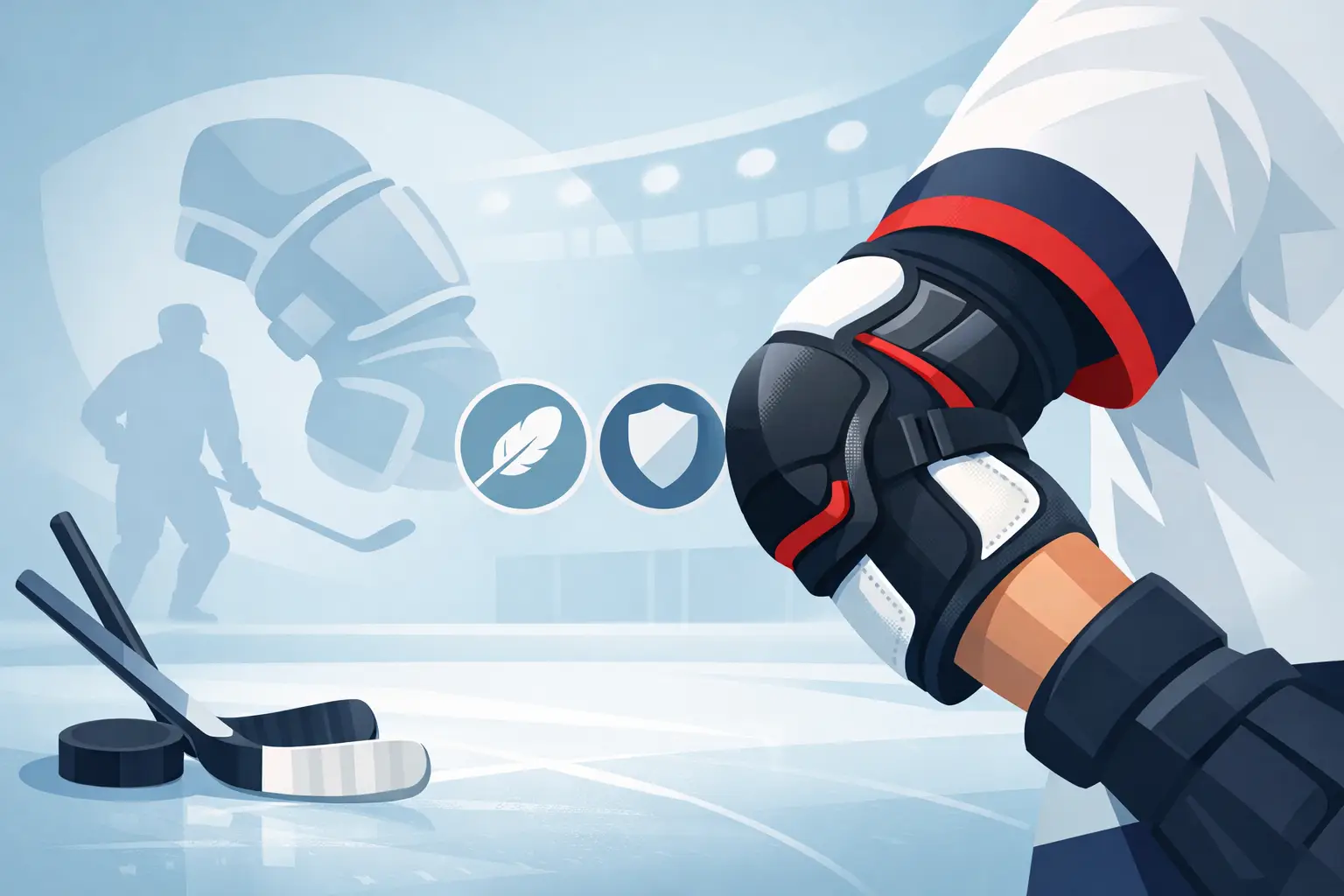
A properly fitted elbow pad should center the elbow directly inside the protective cap. When the arm is bent, the cap should still stay lined up with the point of the elbow rather than drifting off to the side or sliding up or down. The forearm portion should wrap securely without pinching, and the upper section should sit close to the bicep while leaving enough freedom to move naturally.
Most players want the same three things from this piece of equipment: protection, comfort, and mobility. The challenge is that changing one can affect the others. A very bulky pad may feel safer for a defenseman or physical player, but some players prefer a tapered, lower-profile model that keeps the arms feeling lighter and freer. There is no single right build for everybody. There is a right fit for how you play.
Where elbow pads should sit on the arm
Start with the elbow itself. The hard cap should fully cover the elbow joint. If the cap sits above or below the elbow when the arms are relaxed, the size is wrong or the pad shape does not match the player well.
Then look at the ends of the pad. The top should overlap the bottom of the shoulder pad or at least close the gap enough that the upper arm is not exposed during movement. The lower section should extend far enough down the forearm to meet the glove cuff without leaving too much open space. Small gaps can become big problems once a player starts reaching, shooting, and battling along the boards.
This is why trying on elbow pads with the rest of the upper-body gear matters. A pad can seem fine on its own and still leave exposed areas when worn with a specific shoulder pad or glove combination.
The elbow cap must stay centered
This is the part players and parents should check first. Bend and straighten the arm several times. Rotate the wrist. Mimic a shooting motion. If the elbow cap shifts away from the joint, that pad is not doing its job consistently.
Some movement is normal, especially before straps are fully adjusted, but the cap should not wander significantly. If it does, the fit may be too long, too wide through the forearm, or simply the wrong shape for that player’s arm.
The forearm should feel secure, not squeezed
A common mistake is assuming tighter always means safer. In reality, a pad that clamps too hard around the forearm can become uncomfortable quickly and may even encourage the player to loosen straps too much later. The fit should be snug enough to stay put, but not so tight that it creates pressure points or limits stickhandling comfort.
Players with thinner forearms often notice this first. Some models naturally fit narrower arms better, while others have a roomier wrap designed for players who want more volume or wear base layers underneath.
Signs your elbow pads do not fit correctly
Poor fit usually shows up in obvious ways once you know what to look for. Pads that slide down during skating or contact are too loose, too long, or not shaped correctly for the arm. Pads that gap badly between the glove and shoulder pad are often the wrong length. If the elbow cap never seems to line up no matter how the straps are adjusted, it is usually a sizing or profile issue rather than a simple adjustment problem.
Discomfort is another clue. If a player complains that the pad digs into the inside of the elbow when bending the arm, the fit may be too tight or the pad may be sitting in the wrong spot. If the arms feel bulky and restricted, the player may need a more anatomical or tapered option instead of a traditional volume fit.
You can also spot problems by looking at the straps. If they need to be pulled to their absolute limit just to hold the pad in place, the fit is probably too big. If the straps barely reach or create excessive pressure, the fit is likely too small.
How to size elbow pads the right way
Sizing charts are a useful starting point, especially when shopping online, but they should not be treated as the final answer. Most brands size elbow pads using a combination of player height and sometimes arm length. That helps narrow the options, but two players of the same height can still need different fits depending on build, shoulder pad style, and glove size.
The best approach is to begin with the chart, then confirm the fit physically. Have the player put the pad on correctly, center the elbow in the cap, secure all straps, and move through normal hockey motions. Reach forward as if handling a puck. Lift the arms. Bend and extend repeatedly. The pad should stay aligned and comfortable throughout.
For growing players, parents sometimes buy a size up hoping to get another season out of the gear. That can work for some equipment, but elbow pads are not a great place to create extra room. If the elbow is not protected now, future growth does not help. Protection has to match the player’s current body.
Youth, teen, and adult fit differences
Younger players often need the simplest fit priorities: full elbow coverage, secure straps, and easy movement. They are less likely to tolerate a pad that constantly needs adjustment, and they may not explain clearly what feels off. If a youth player keeps tugging at the pads on the bench, that is usually useful feedback.
Teen players tend to be the toughest to fit because growth can happen fast. Arm length changes, shoulder pads get upgraded, and glove preferences shift. Rechecking overlap at both ends of the elbow pad becomes especially important during these years.
Adult recreational players sometimes focus mostly on comfort, which makes sense, but comfort should not come at the expense of stability. A lightweight pad is fine if it stays in place and provides the right level of protection for the game being played. Beer league and pickup still involve falls, collisions, and awkward contact.
Fit profile matters as much as size
Not every elbow pad is built the same way. Some are more traditional with a roomier fit and larger overall shape. Others are tapered or anatomical, designed to sit closer to the arm. One player may feel locked in and protected by a close-fitting model, while another may find it too restrictive and prefer more volume.
This is where a specialty hockey shop has real value. On paper, two pads may look similar. On the arm, they can feel completely different. Experienced fitting help can often spot quickly whether a player needs a narrower wrap, a different cap position, or simply a shorter or longer model.
If you are shopping in person, try more than one line when possible. If you are shopping online, pay close attention to how the gear is intended to fit and compare that to what has or has not worked before.
Small adjustments that improve hockey elbow pad fit
Sometimes the size is right and the setup is wrong. Make sure the elbow is fully seated in the cap before tightening anything. Fasten the middle and forearm straps firmly enough to hold the pad in place, then check the upper anchor. If one strap is doing all the work, the pad may rotate or slip.
Base layers can change fit slightly too. A thin compression top may help reduce rubbing and give the pad a more stable surface, while a bulky shirt underneath can create bunching and make the fit less consistent.
It also helps to reassess fit after shoulder pads and gloves are on. The full setup tells the truth. That is when gaps, bunching, and mobility issues become obvious.
The right elbow pad should disappear once the game starts. You should not be thinking about sliding straps, exposed skin, or restricted movement every shift. If the cap stays centered, the coverage overlaps properly, and the pad moves naturally with the arm, the fit is doing what it should. That is the goal every player, parent, and fitter should be chasing.


 -
-